Stack Depth Variations and Their Effect on River Calling Ranges in Multiplayer Online Pot-Limit Omaha
Cameron Krüger · Sep 30, 2026

Stack Depth Variations and Their Effect on River Calling Ranges in Multiplayer Online Pot-Limit Omaha
Stack depth plays a central role in shaping river calling ranges during multiplayer online Pot-Limit Omaha sessions, where four-card hands create complex equity distributions and frequent multiway pots. Data from major platforms indicates that effective stack sizes measured in big blinds directly alter the mathematical thresholds players apply when facing river bets, especially in four- or five-handed pots common to PLO formats.
Core Mechanics of Stack Depth in PLO
Effective stack depth determines how much room remains for future betting streets after the river action concludes, and this factor becomes pronounced in Pot-Limit Omaha because the game caps bet sizes at the current pot while allowing four-card combinations that often produce strong but vulnerable hands. Researchers tracking online databases have documented that stacks below 30 big blinds compress calling ranges on the river since players receive immediate pot odds without significant implied odds left to realize, whereas stacks exceeding 100 big blinds expand or contract ranges depending on board texture and prior action.
Multiplayer dynamics amplify these effects because each additional participant reduces individual equity shares yet increases the likelihood of someone holding a disguised strong hand, and observers note that river decisions in these spots hinge on whether remaining stacks support further commitment or force fold equity calculations based solely on current pot size.
River Calling Adjustments Across Depth Levels
Shallow stack scenarios under 40 big blinds lead participants to widen river calling ranges in online PLO because the bet-to-pot ratio often reaches levels where hands with 25 percent equity or higher become profitable calls, particularly when multiple opponents have already contributed to the pot. Platform statistics compiled through 2025 and into September 2026 reveal that average river fold rates drop by measurable margins in short-stack tables compared with deeper configurations.
Deeper stacks between 80 and 150 big blinds introduce additional layers since players must account for possible future streets even after the river card appears, and this leads to tighter calling ranges against large bets when the board presents flush or straight possibilities that multiple opponents could have completed. Analysts examining hand histories from major sites have found that calling frequencies decrease as stack depth increases beyond 100 big blinds, especially in four-way pots where equity realization becomes harder to estimate precisely.
Multiplayer Specific Patterns
In four- and five-handed online PLO games the presence of multiple ranges overlapping on the river creates situations where stack depth influences not only individual calls but also the collective pressure applied by remaining stacks, and data shows that players adjust by folding more marginal holdings when deeper stacks remain behind because implied odds for future confrontations diminish. Turns out that river bet sizing in these environments often correlates with stack depth, with larger relative bets appearing more frequently at shallower depths to maximize fold equity before stacks run out.
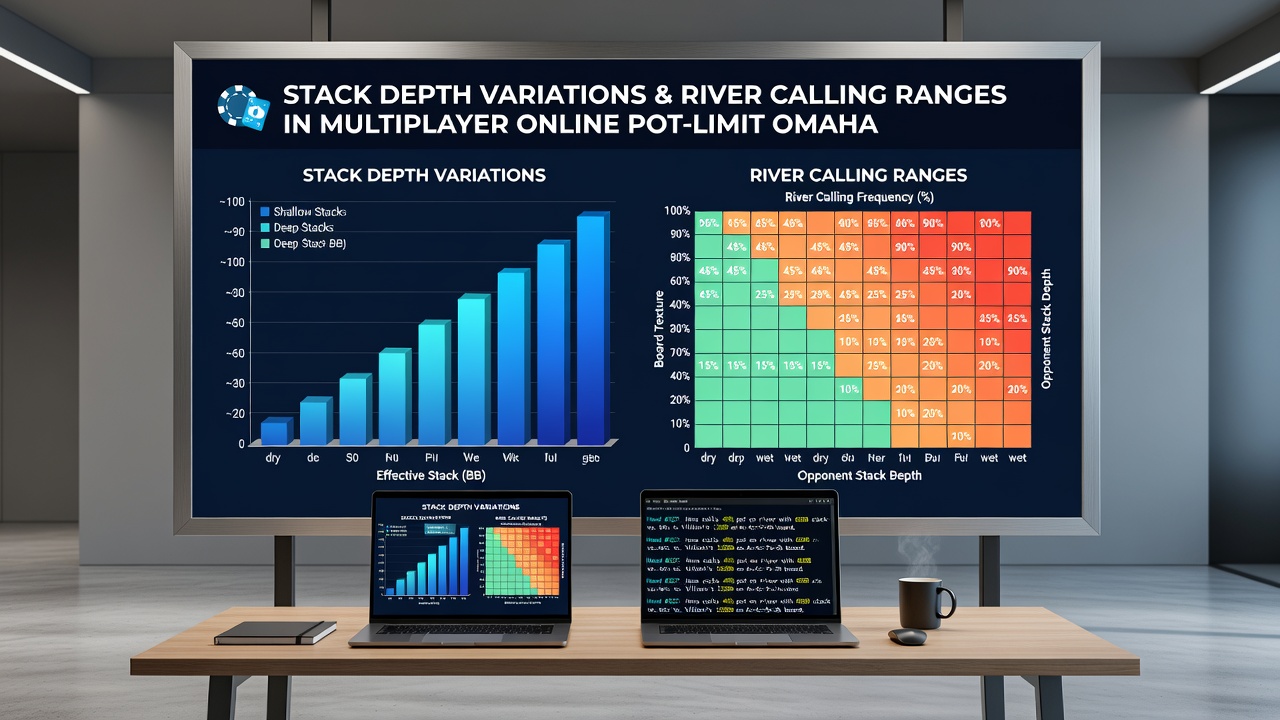
What's interesting is how position interacts with these depth variations, since late-position players facing river action can leverage remaining stack information more effectively than early-position callers who must decide without seeing further action from behind, and figures from aggregated online sessions confirm wider defending ranges from the button at moderate depths compared with blinds.
Data Trends Observed in 2026 Online Environments
September 2026 records from international poker networks indicate sustained growth in Pot-Limit Omaha traffic across both fixed and variable stack formats, with river decision points showing distinct clustering around 50 and 120 big blind effective depths where calling ranges shift most noticeably. A report published by the National Center for Responsible Gaming highlights patterns in player behavior across depth categories without attributing causality to any single factor.
Those tracking European markets through sources such as the Australian Gambling Research Centre have noted parallel trends in virtual tables, where deeper stack tables produce lower average river call percentages in multiway scenarios, and this holds across different stake levels tracked during the same period.
Conclusion
Stack depth variations continue to shape river calling ranges in multiplayer online Pot-Limit Omaha through measurable adjustments in equity thresholds and bet sizing responses, with platform data confirming consistent patterns across shallow, moderate, and deep configurations. Observers monitoring these environments through September 2026 and beyond record that effective stack size remains a primary variable influencing decision frameworks in four-card pot-limit formats.